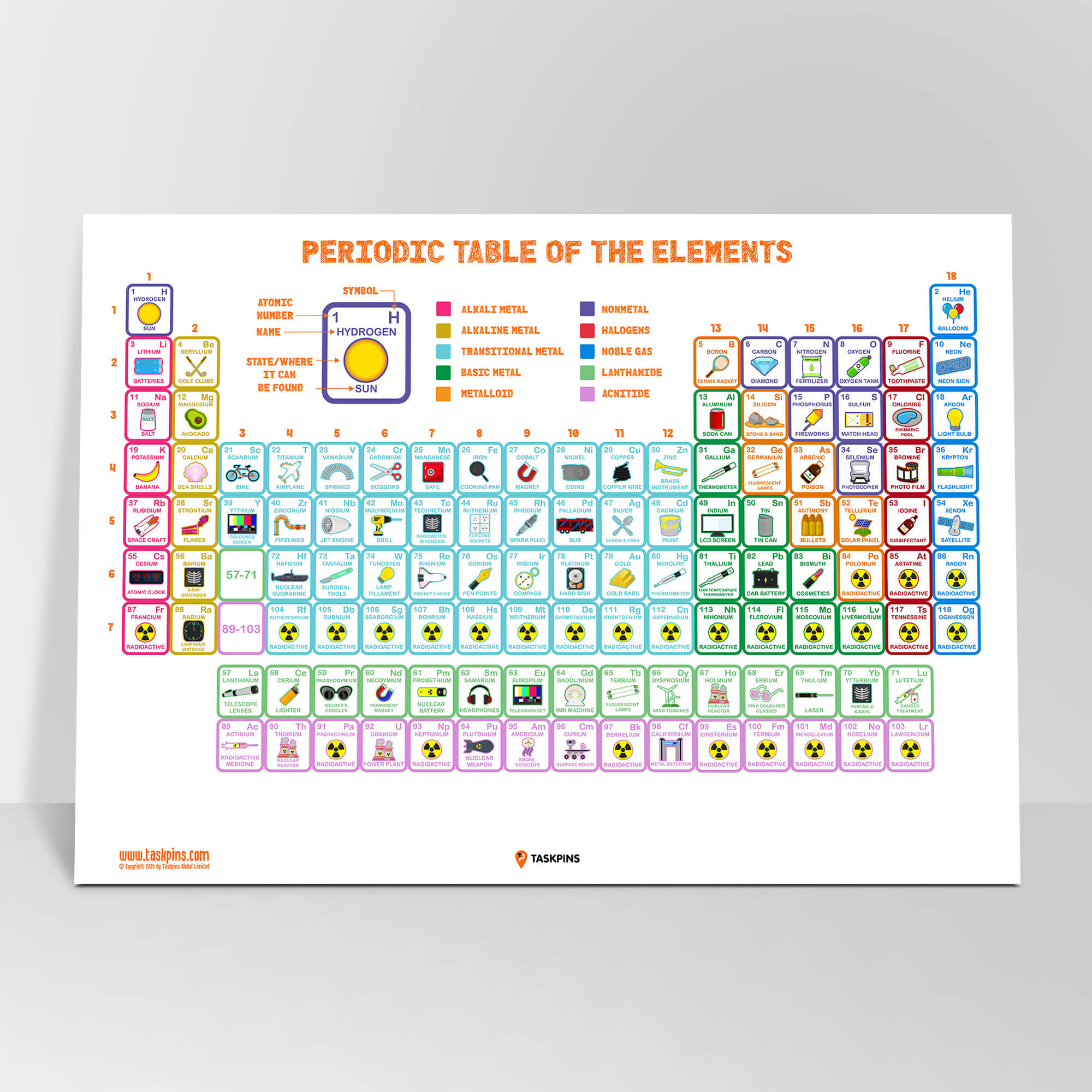

Periodic Table of Elements Poster for Classroom
Does A Poster Really Help?
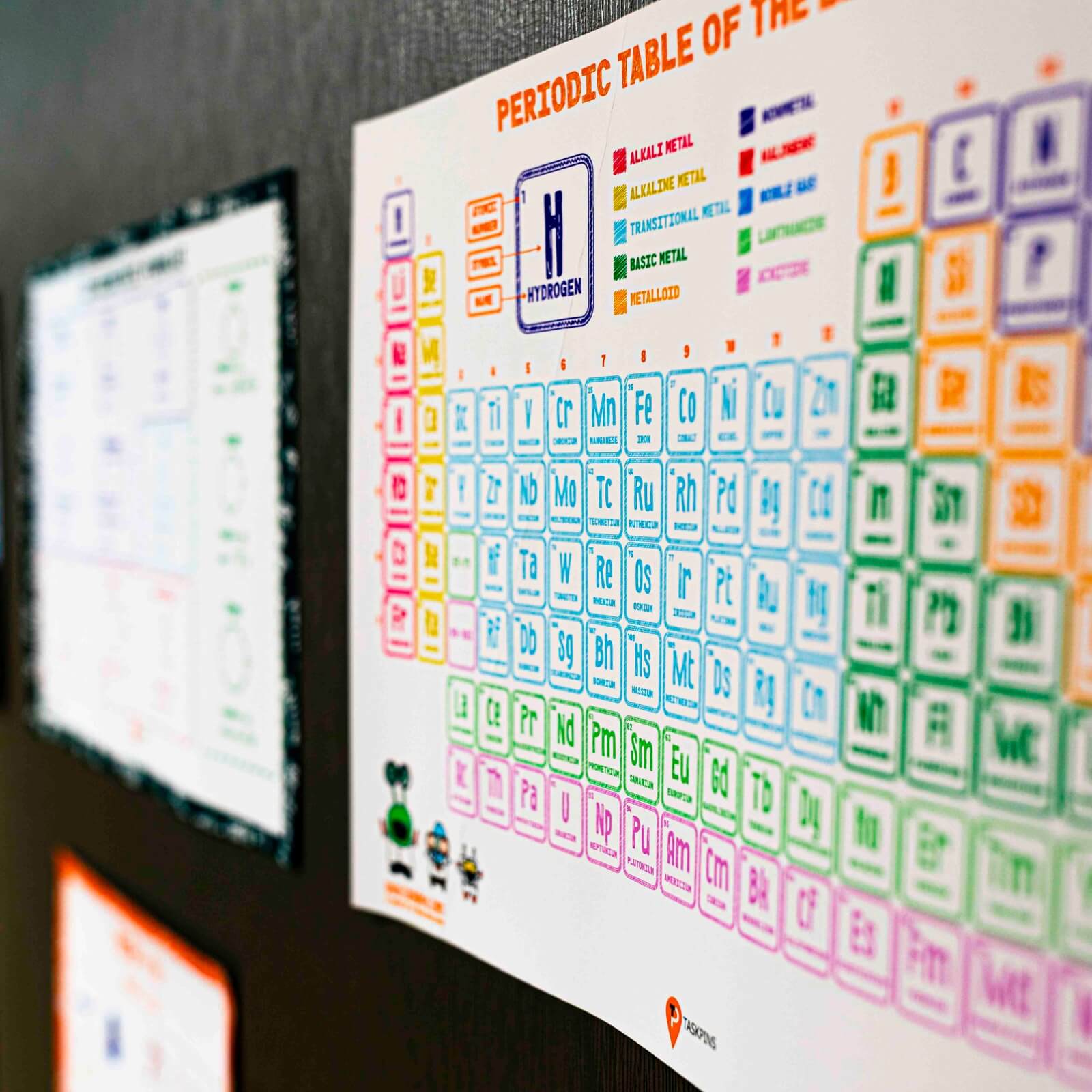
A well-designed periodic table of elements poster for classroom use transforms any science space into an interactive learning hub. Teachers and homeschool parents who hang a clear, colorful printed periodic table poster notice immediate improvements in student engagement and retention. Unlike digital screens that compete for attention, a physical poster stays visible all day, every day, having the unique benefit of quietly reinforcing chemistry concepts without extra effort.
Why Every Classroom Needs A Printed Periodic Table Poster
The periodic table is more than a chart. It is the roadmap of chemistry. When displayed in large format and high print quality, a periodic table of elements poster for classroom will create a focal wall. It becomes a constant companion for lessons on atoms, reactions, and properties. Students no longer need to flip through textbooks or open laptops for basic facts. The poster acts as a handy reference point for atomic numbers, element symbols, atomic masses, and group trends at a single glance.
Printed versions offer unique advantages over digital alternatives. They eliminate screen glare and eye strain during long lessons. Teachers may also laminate the poster for durability, allowing students to point, highlight trends with dry erase markers, or even add notes during units on metals, nonmetals, or noble gases. The poster is always present and so it naturally supports differentiated instruction. Advanced students explore transition metals while beginners might focus on the first 20 elements.
How Kids Benefit From A Classroom Periodic Table Poster
Children absorb information best when it surrounds them. A periodic table poster in the classroom helps kids build confidence in science from an early age. Younger students in grades 3–6 start recognizing patterns, such as why lithium and sodium behave similarly, or why helium sits alone at the top. Older students in grades 7–10 use the same poster to master electron configurations, electronegativity trends, and periodic law.
The benefits extend beyond test scores. Kids develop a growth mindset toward challenging subjects. When they see the periodic table every morning, chemistry stops feeling like a foreign language and becomes familiar territory. Teachers report fewer “I forgot” moments during quizzes because the visual reference is literally on the wall. Students with learning differences, especially visual or kinesthetic learners, gain an equal footing because the poster turns abstract symbols into something concrete and approachable.
Hands On Interaction Ideas That Make Learning Fun
Interaction turns passive observation into active learning, perhaps even creating core memories. Here are proven ways teachers use a periodic table of elements poster for classroom success:
- Element Scavenger Hunts: Students race to locate elements by name, symbol, or atomic number. Add a timer for excitement.
- Trend Mapping Activities: Groups use colored stickers or sticky notes to highlight alkali metals, halogens, or noble gases. They literally “see” the periodic law in action.
- Daily Warm-Ups: Start class with “Find the element that…” questions. One student points while the class shouts the answer.
- Creative Projects: Kids design superhero elements based on real properties or create “element trading cards” using the poster as reference.
- Group Challenges: Divide the class into teams to build mini periodic tables on the floor using the wall poster as a guide.
These activities work especially well with a large format printable periodic table poster because students can gather around it without crowding a small screen. Touching the poster, tracing rows and columns, and physically moving between elements strengthens neural pathways far better than clicking a mouse.
The Periodic Table Poster As An Instant Reference Sheet
During independent work, labs, or homework, the poster functions as a built in cheat sheet, except it’s completely allowed! Students check atomic masses for stoichiometry problems, verify group numbers for bonding predictions, or quickly recall electronegativity values for polarity discussions. No more wasted time searching online or flipping pages.
This instant access builds independence. Shy students quietly consult the poster instead of asking for help. Advanced learners cross-reference trends while designing experiments. Over a school year, the poster evolves from a simple reference into a trusted study partner that students rely on instinctively.
How Visual Reference Boosts Long Term Memorization
Science shows that repeated visual exposure dramatically improves recall. The brain forms stronger memories when information appears in the same consistent location day after day. A periodic table of elements poster for classroom walls leverages this principle through passive spaced repetition. Students glance at it while walking to their seats, during downtime, or while daydreaming. Each glance reinforces connections without conscious effort.
Colour coded designs (metals in one hue, nonmetals in another) add another layer of visual encoding. Students begin associating colours automatically. Over months, these mental shortcuts become permanent. Teachers often hear former students say, “I still picture the poster in my head during exams,” proving the visual reference creates lasting neural maps.
Compared to flashcards or apps that students forget to use, the wall poster requires zero extra motivation. It simply works through consistent presence, turning memorization from a chore into an effortless background process.

Periodic Table Ideas for Teachers
Teachers can quickly turn the poster into a daily teaching tool with minimal prep.
Hang it at eye level and use a laser pointer during explanations of periods vs. groups.
Assign “Element of the Week” — spotlight one element with fun facts, real-world uses, and a quick quiz.
Create a “living periodic table” wall where students add photos or drawings of objects containing specific elements (e.g., aluminum foil next to Al).
Use it for quick exit tickets: “Point to an element in Group 17 and name one property.”
Incorporate it into review games like periodic table bingo or Jeopardy-style questions.

Periodic Table Ideas for Parents
At home, parents and caregivers can make the periodic table part of everyday learning.
Place a printed poster in the kitchen or study area and play “I Spy an Element” during meals (e.g., “I spy something used in salt” → Na and Cl).
Turn family game night into element charades or matching games using element flashcards made from the poster.
Link elements to real life: discuss iron (Fe) while cooking with cast iron pans or helium (He) during birthday balloon time.
Create a weekly “Element Journal” where kids draw or write one fact about a chosen element from the poster.
Use it as a reference during science documentaries or simple kitchen experiments
Ready To Bring Chemistry To Life?
Elevate your classroom or homeschool space with a clean, modern periodic table poster that students will actually use and love. Our high-resolution Periodic Table Printable Download is optimized for classroom printing—crisp text, vibrant colors, and multiple size options so you can create the perfect display.
Download it today, print it large, laminate if desired, and watch your students’ confidence and curiosity soar. The periodic table of elements poster for classroom isn’t just decoration; it’s a daily learning tool that delivers measurable results in engagement, understanding, and long-term retention.
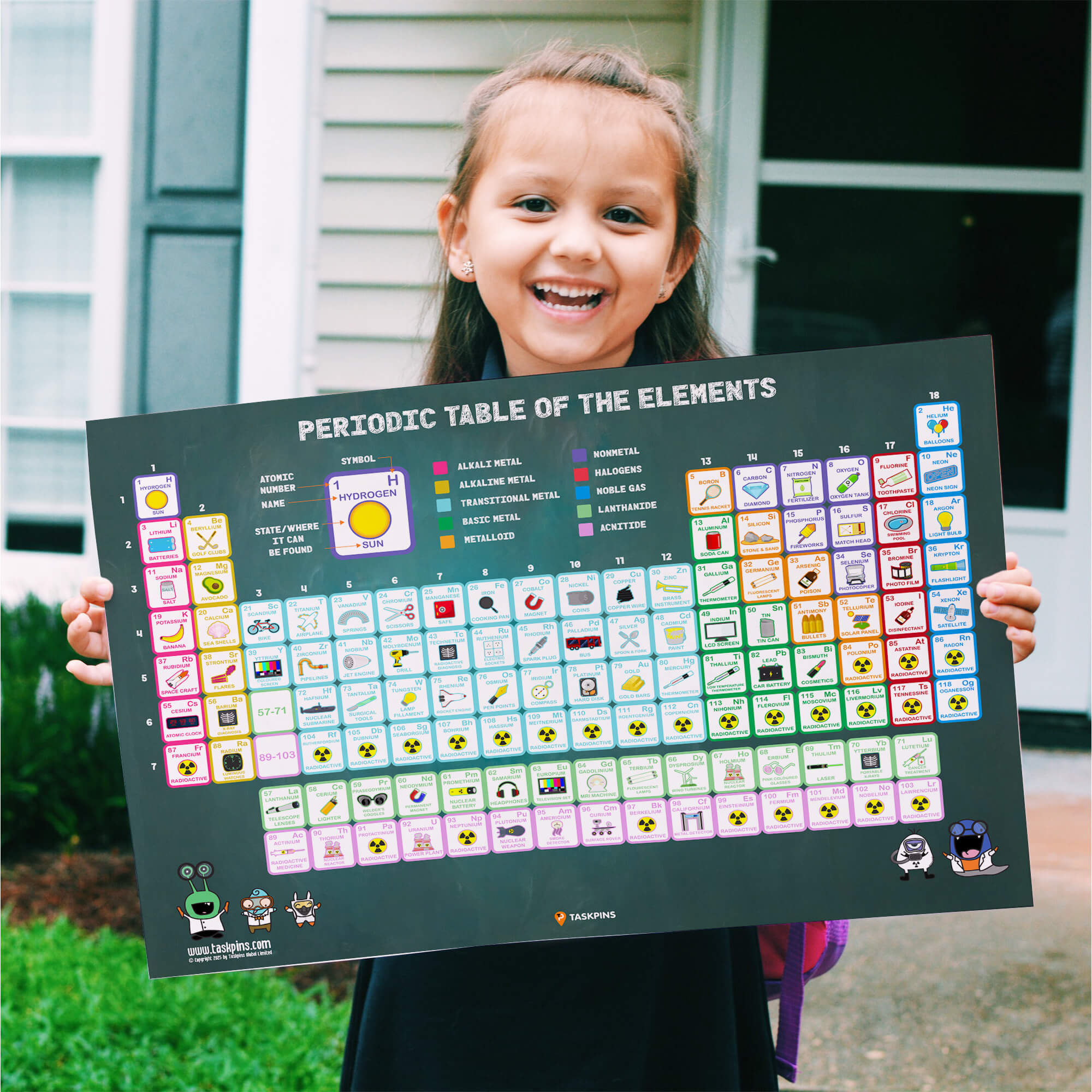
Give your students the visual advantage they deserve. Each design includes three background colours to choose from, and by far the most popular version being used in schools and homes is the picture version with the white background.