
How To Teach Shapes In Preschool
Do toddlers learn shapes easily?
Teaching shapes to preschoolers is one of the foundational steps in early childhood education. At this age, children are naturally curious about the world around them, and shapes form the building blocks of geometry, spatial awareness, and even problem-solving skills.
By introducing shapes early, we help kids recognize patterns, understand their environment, and develop cognitive abilities that will serve them throughout their lives.
Whether it’s identifying a circle in a cookie or a square in a block, learning shapes makes everyday objects come alive with meaning. How to teach shapes in preschool is a multi-pronged approach and we will explore the role of visual aids like posters, and practical tips for both parents and teachers to make the process fun and engaging.
How Preschoolers Learn About Shapes
Preschoolers, typically aged 3 to 5, learn best through play and sensory experiences rather than rote memorization. Their brains are wired for exploration, so incorporating shapes into hands on activities is key.
Start with basic shapes like circles, squares, triangles, and rectangles, then gradually introduce more complex ones such as ovals, stars, and diamonds.
One effective method is through interactive games. For instance, shape hunts around the house or classroom encourage kids to spot shapes in real-life objects, for example a round clock, a triangular slice of pizza, or a rectangular door. This not only reinforces recognition but also builds vocabulary as children describe what they see.
Another great way is to make use of art time with activities like drawing shapes with crayons or cutting them out from colored paper, as these allow for creative expression while solidifying concepts.
Sensory bins filled with shape-themed toys, such as foam cutouts or wooden blocks, provide tactile learning, helping kids feel the edges and curves that define each shape.
Songs and rhymes are another powerful tool. One of our favourites is the classic “The Wheels on the Bus” to highlight circles, while simple chants like “Triangle has three sides, up and down and side to side” make learning rhythmic and memorable. Digital apps and educational videos can supplement this, but they should be used sparingly to avoid screen overload.
The goal is to make learning multisensory: see the shape, touch it, hear about it, and even move like it. An example of this could be to have kids forming a circle by holding hands, changing to a rectangle, then to a triangle, or even stretching into a star pose.
Consistency is crucial at this stage. Preschoolers thrive on repetition, so revisiting shapes daily in short bursts prevents kids becoming overwhelmed and promotes retention. As they progress, introduce concepts like symmetry (e.g., folding a square to show equal halves) or combining shapes to form pictures, fostering early math skills.

Teaching Shapes for Teachers
Teachers could create a structured yet playful environment for shape learning.
Group activities, like circle time where kids sit in a circle formation, set the tone.
Use manipulatives such as pattern blocks for building designs, or shape bingo for competitive fun.
Integrate shapes into other subjects: in science, discuss round planets; in music, clap to triangular rhythms.
Differentiated instruction are key as some kids may need one on one guidance, while others excel in peer led games.
Assess understanding through informal observations or simple worksheets, and collaborate with parents via newsletters that share activities for parents to play with their toddlers.
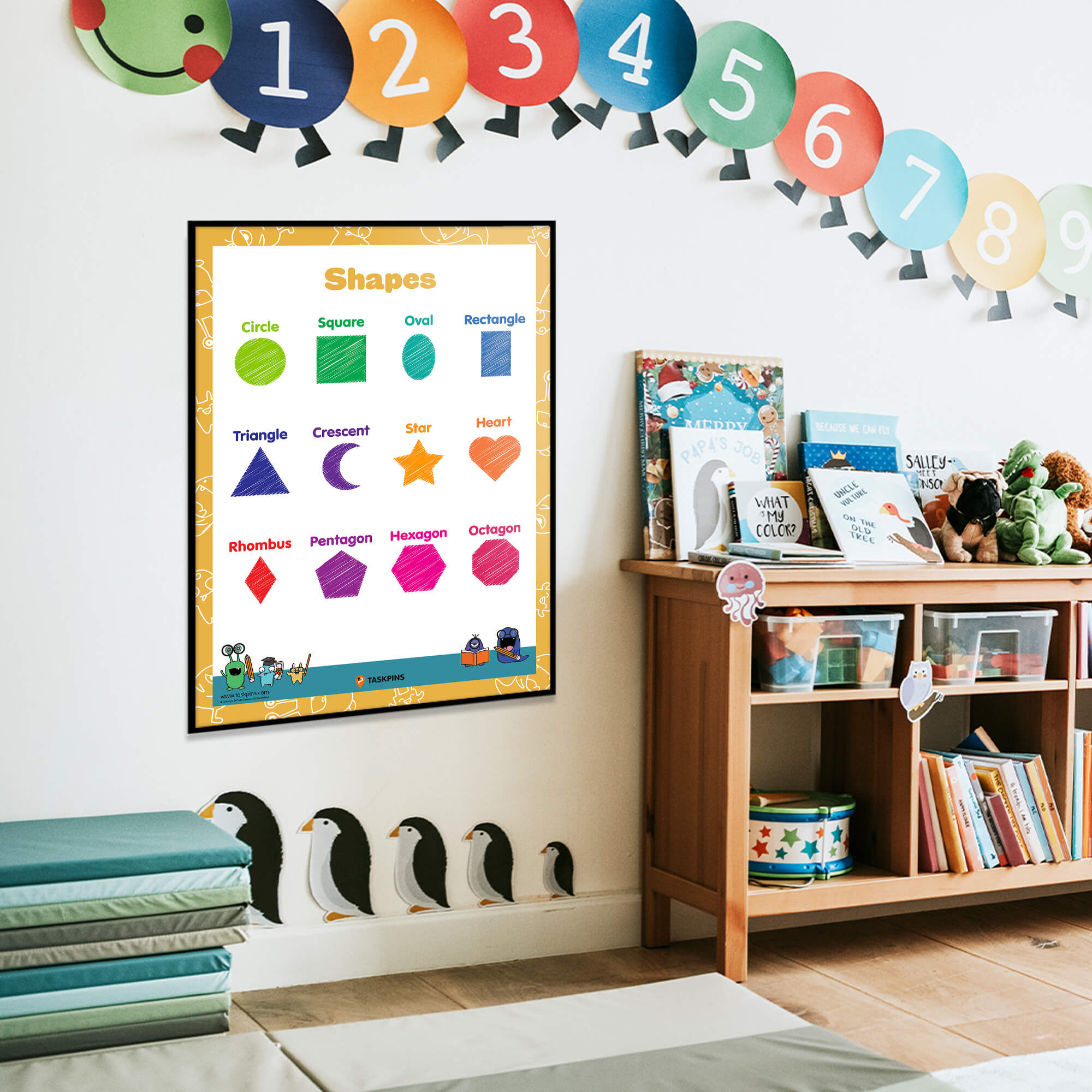
Tools like our shapes poster can anchor the classroom’s math corner, providing a shared reference for lessons.
Blending play, visuals, and everyday interactions is the key ingredient in how to teach shapes in preschool, and will equip children with essential skills
Make use of classroom decor
Teaching Shapes for Parents
Parents play a pivotal role in reinforcing shape education outside the classroom.
The most important thing is to keep it simple and integrated into daily routines.
During mealtime, point out the square sandwich or oval grape. Bath time could involve shape sorting toys in the tub, while walks in the park become opportunities to spot diamond kites or hexagonal stop signs.
Make use of picture books, where your child could identify shapes in the illustrations. Craft sessions with playdough allow kids to mold their own circles and squares, enhancing fine motor skills.
Always use positive reinforcement to praise their efforts with phrases like “Great job spotting that triangle!” to build enthusiasm.
By building it into your toddlers day, it will help to avoid fatigue, while you could also track progress with a fun chart where they sticker shapes they’ve mastered.
Consistency and creativity are your best friends
The Role Of A Shapes Poster As A Visual Cue
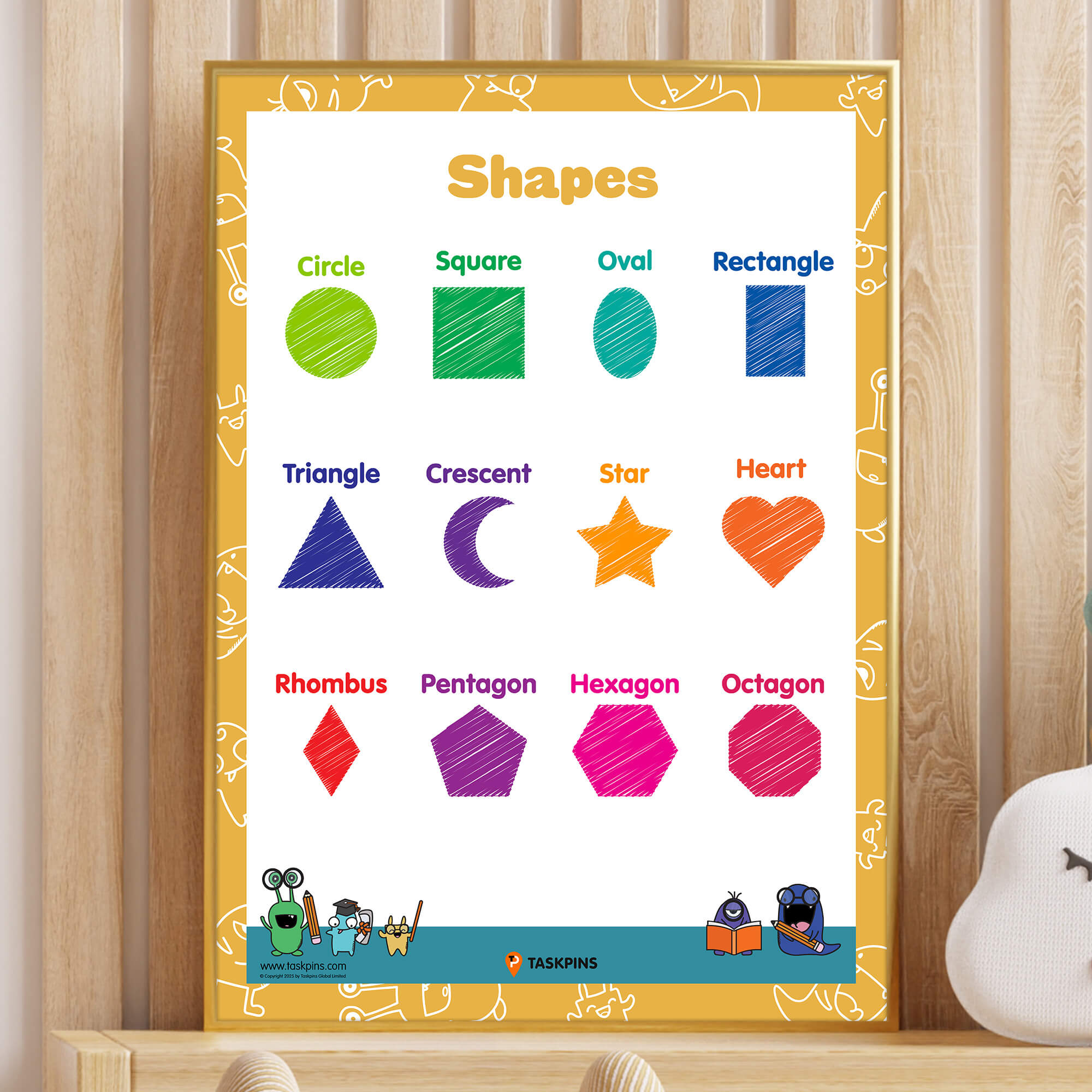
When thinking about how to teach shapes in preschool, a well-designed shapes poster would be an invaluable tool in this learning journey.
Hung on a wall in a child’s room, play area, or classroom, it serves as a constant visual cue without being intrusive. Unlike flashcards that require active handling, a poster blends into the background, offering passive reinforcement every time a child glances at it.
Bright colors, clear illustrations, and simple labels make it appealing and easy to understand, turning downtime into subtle learning moments. For example, our store’s shapes poster features simple and vibrant illustrations of shapes.
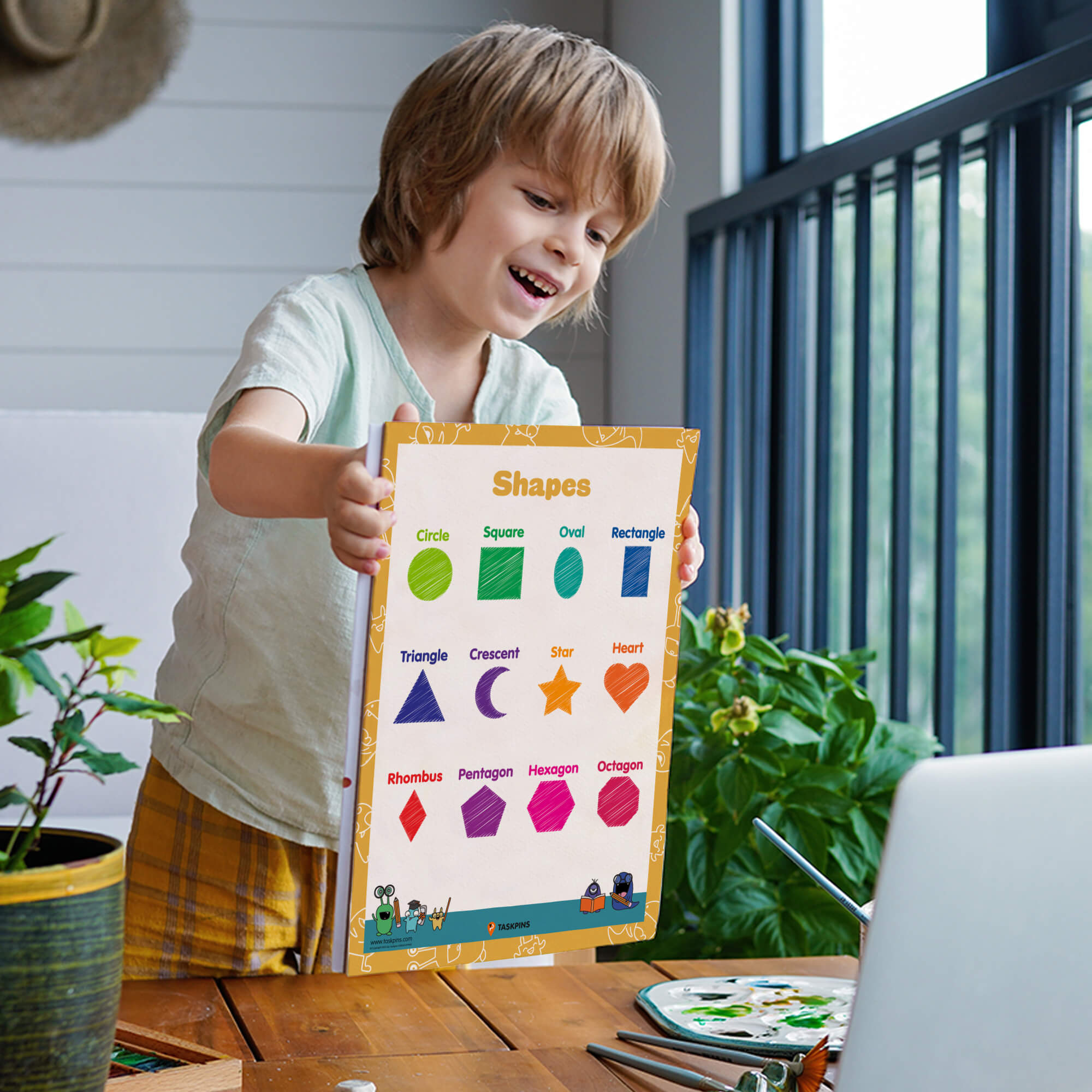
Over time, the poster becomes a familiar reference point; it is very common for us to see kids point to a shape on the poster during play or story time, proudly identifying shapes on their own.
It’s non-intrusive because it doesn’t demand attention. It’s just there, gently reminding them of what a triangle or hexagon looks like.
Early education experts overwhelmingly would agree that such visual aids improve memory retention, as they leverage the brain’s preference for images over text.
Placing the poster at eye level ensures accessibility, and rotating it occasionally with new themes as the child develops keeps interest alive.
In essence, it’s a low-effort, high-impact resource that supports independent learning and boosts confidence.
Designed with toddlers in mind, we are confident if you are a teacher, parent, homeschooler, a pediatrician clinic looking for engaging decor, or anyone looking for ways on how to teach shapes in preschool, this digital download is available for you to print at home or send to a professional photo printer to create an amazing poster that will be a talking point in any school or home!
Download your Shapes Poster today and inspire your students! Start now for instant access!